LivePolitics
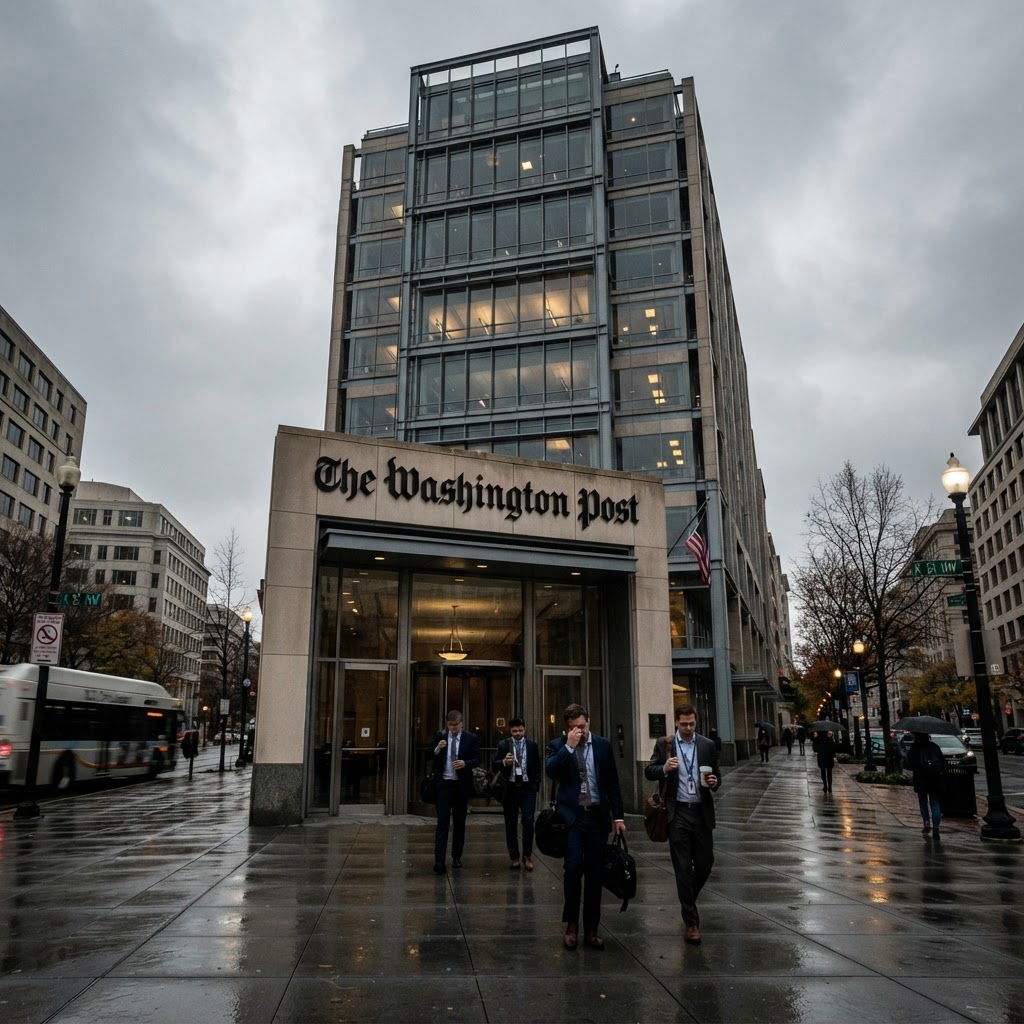
Washington Post Faces Internal Turmoil as Dramatic Staffing Cuts Shake Newsroom
The Washington Post, under the ownership of Jeff Bezos, has announced a series of dramatic staff reductions, triggering widespread concern about the future of investigative journalism and the paper's role in the current political climate.
Washington Post• Oct 7, 2026 • 6:44 AM•2 min read
NEWS
The Washington Post, a cornerstone of American journalism, is currently navigating a period of profound internal instability following the announcement of significant staff reductions. The cuts, which were confirmed by leadership on Tuesday, have sent shockwaves through the newsroom and the broader media landscape. These layoffs come at a time when the paper is tasked with covering a highly polarized political environment under the second term of President Donald Trump. The decision, attributed to shifting economic models and the need for digital transformation, has raised questions about the long-term viability of traditional news organizations in the age of social media and AI-driven content. Staff members have expressed deep frustration and concern, noting that the reduction in personnel will inevitably impact the depth and breadth of the paper's investigative reporting. 'We are losing some of our most experienced voices at a time when the country needs them the most,' one veteran reporter remarked. The ownership of Jeff Bezos has been a point of contention for years, with critics arguing that the paper's editorial independence is constantly under pressure from corporate interests. As the newsroom grapples with these changes, the political establishment in Washington is watching closely. The Washington Post has long been a primary source for government news, and any decline in its capacity to hold power to account is viewed by many as a blow to democratic transparency. The announcement has also sparked a broader conversation about the state of the media industry, with many outlets facing similar pressures to cut costs while maintaining high standards of journalism. Despite the turmoil, the paper's leadership maintains that these changes are necessary to ensure the institution's survival in a rapidly evolving digital market. However, for many readers and political observers, the news is a sobering reminder of the fragility of the press in the modern era. As the paper moves forward, the challenge will be to maintain its reputation for rigorous, non-partisan reporting while navigating the financial realities of the 21st century. The impact of these cuts on the paper's coverage of the Trump administration and the 2026 election cycle remains to be seen, but the atmosphere in the newsroom is undeniably tense as the staff prepares for a new, leaner reality.
Reactions
Share:
Washington PostJeff Bezosmedia newsjournalismpolitical news todaypolitics breakinggovernment newselection newscongress newssenate newswhite house newsDonald Trumpnewsroom layoffsmedia industryinvestigative journalismpress freedomcorporate mediadigital transformationWashington DCpolitical reportingmedia analysisnews industrydemocratic transparencyeditorial independencebreaking news