Politics
Trump's Data Center Power Pledge Draws Industry Skepticism Amid AI Infrastructure Boom
President Trump announced a non-binding pledge to address the massive power demands of AI data centers, but industry experts and energy analysts remain skeptical about the plan's feasibility. The proposal comes as tech giants race to build infrastructure for the AI revolution.
Reuters / US News• Jul 24, 2026 • 2:07 PM•4 min read
NEWS
President Donald Trump announced a non-binding pledge to address the surging power demands of AI data centers, but the proposal has drawn skepticism from industry experts and energy analysts who question whether the plan can deliver on its promises.
The Pledge and Its Promises
The Trump administration's pledge aims to ensure that the rapid expansion of data center infrastructure — driven by the artificial intelligence boom — will have access to sufficient electricity to operate. The non-binding agreement outlines commitments from the government and industry to coordinate on power generation, grid expansion, and energy efficiency.
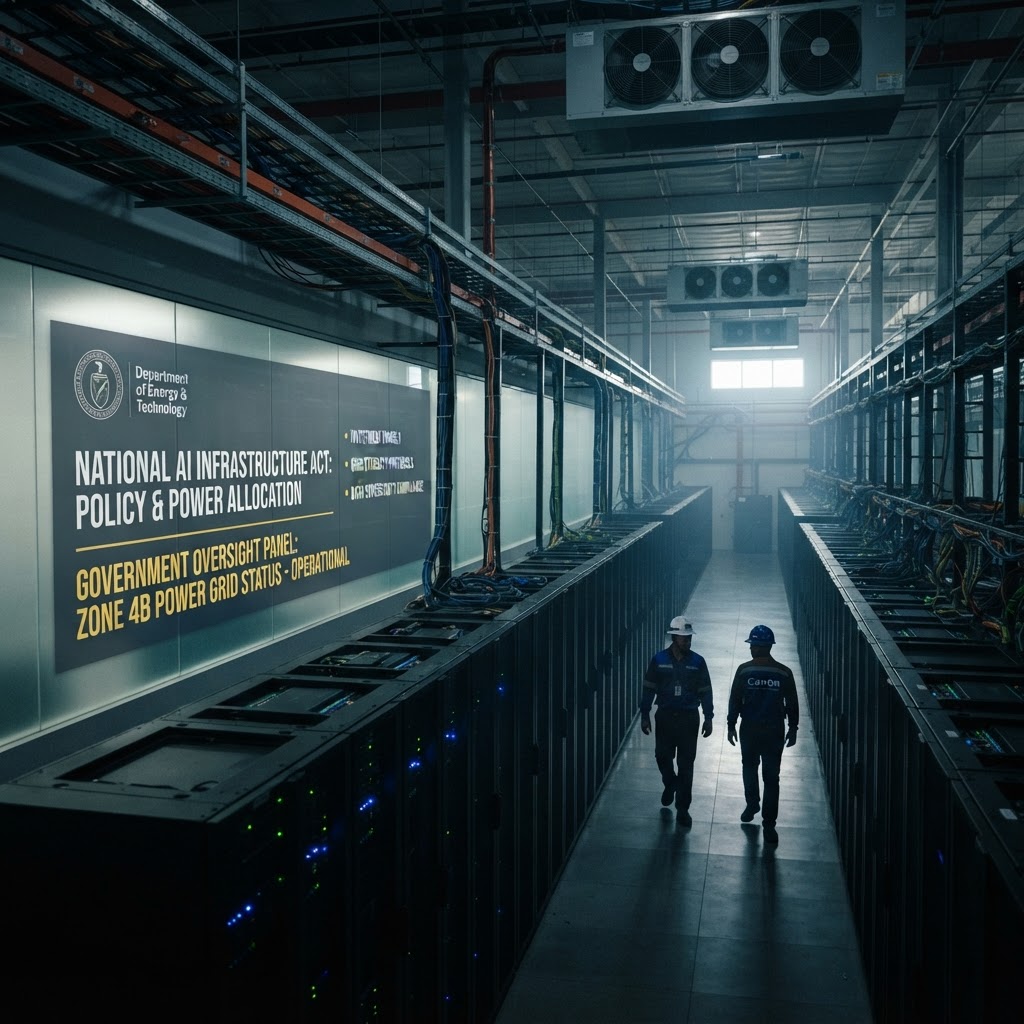
Data centers have become one of the fastest-growing consumers of electricity in the United States, with AI training and inference workloads requiring enormous computational resources. Major technology companies including Microsoft, Google, Amazon, and Meta have committed hundreds of billions of dollars to data center construction, creating what some analysts describe as an unprecedented demand shock for the power sector.
Industry Skepticism
Despite the ambitious goals outlined in the pledge, industry response has been guarded. Critics point out that the non-binding nature of the agreement means there are no enforcement mechanisms or concrete commitments to ensure the power infrastructure will actually be built.
"A pledge without binding commitments or a clear implementation roadmap is really just an aspiration," said one energy industry analyst. "The timelines for building new power generation — whether it's nuclear, natural gas, or renewables — are measured in years, not months. We need concrete action, not just words."
The skepticism is particularly focused on the gap between the speed of data center construction and the much slower pace of power infrastructure development. While tech companies can build data centers in 18-24 months, new power plants and transmission lines can take a decade or more to permit and construct.
The AI Power Crunch
The scale of the challenge is immense. Industry estimates suggest that US data center power consumption could double or even triple over the next five years, driven primarily by AI workloads. This would represent one of the largest increases in electricity demand in modern history, rivaling the electrification waves of the mid-20th century.
Some regions are already feeling the strain. Power grid operators in areas with heavy data center concentration have warned of potential reliability issues, and several states have implemented or are considering moratoriums on new data center connections until power infrastructure can catch up.
Nuclear Energy and Innovation
The pledge reportedly includes references to advanced nuclear technologies, including small modular reactors (SMRs), as part of the solution. Nuclear energy has gained renewed attention as a zero-carbon baseload power source that could meet the around-the-clock demands of AI data centers.
However, SMR technology remains largely unproven at commercial scale, with the first US projects still years away from deployment. Traditional nuclear plant construction has also struggled with cost overruns and delays, raising questions about whether nuclear can be deployed quickly enough to meet near-term demand.
Grid Expansion Challenges
Beyond generation, the pledge also touches on the need for expanded transmission infrastructure. The US power grid was not designed for the concentrated, massive loads that AI data centers create, and upgrading transmission lines and substations requires navigating complex regulatory processes across multiple jurisdictions.
Federal and state regulators will need to coordinate on permitting reforms, rate structures, and interconnection standards to enable the kind of rapid grid expansion that the AI boom demands. Whether the non-binding pledge can catalyze this coordination remains to be seen.
Economic and Political Dimensions
The data center power issue sits at the intersection of several major policy priorities: economic competitiveness in AI, energy independence, climate goals, and infrastructure investment. The Trump administration's approach — emphasizing deregulation and industry self-commitment — reflects a broader philosophy that markets and voluntary cooperation can solve infrastructure challenges.
Critics argue that the market alone cannot solve the data center power problem, pointing to the need for government coordination on permitting, land use, and infrastructure planning. The tension between these perspectives will shape policy debates for years to come.
What's at Stake
The outcome of this initiative has significant implications for US competitiveness in the global AI race. If power constraints limit the ability of American companies to build and operate AI infrastructure, leadership in artificial intelligence could shift to countries with more flexible energy systems.
For now, the pledge represents a starting point rather than a solution. Whether it evolves into the kind of comprehensive strategy needed to power the AI revolution will depend on follow-through from both the administration and industry — and on whether the skeptics' concerns prove to be justified.
Reactions
Share:
Donald Trumpdata centersAI infrastructurepower demandelectricityartificial intelligenceenergy policynuclear energysmall modular reactorsSMRspower gridtech giantsMicrosoftGoogleAmazonMetaenergy consumptiongrid expansiontransmission infrastructureregulatory reformAI boomenergy independenceclimate policyderegulation