World
German Chancellor Merz Reshuffles Top Posts in Bid to Counter Far-Right Surge
Chancellor Friedrich Merz has reshuffled key government positions as his administration struggles with declining approval ratings and the growing electoral threat from the far-right. The cabinet changes represent the most significant government restructuring since Merz took office.
Reuters• Jul 24, 2026 • 2:07 PM•3 min read
NEWS
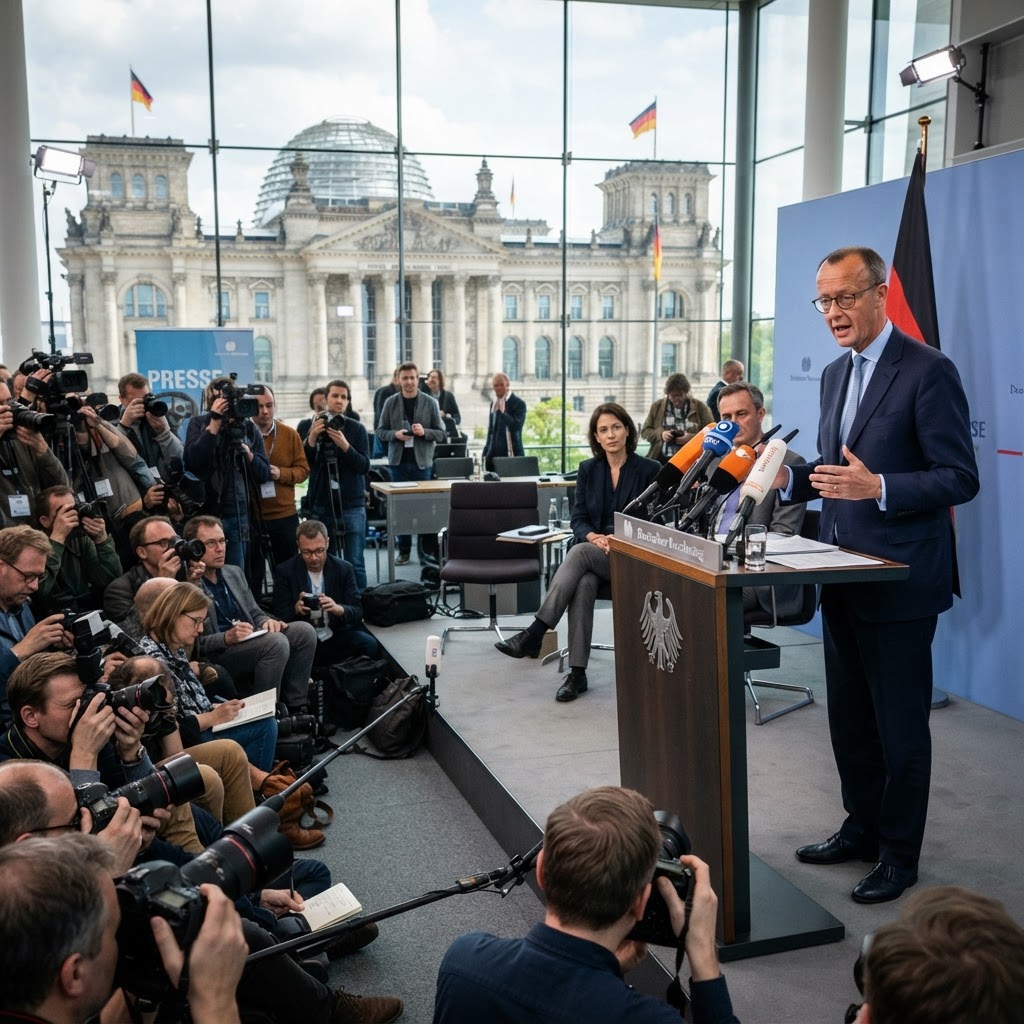
German Chancellor Friedrich Merz has reshuffled top government posts in a bid to boost his unpopular administration and counter the advancing far-right political movement that has gained significant traction across the country.
A Government Under Pressure
The reshuffle comes as Merz's government faces declining approval ratings and growing public dissatisfaction with its handling of key issues including immigration, economic policy, and energy costs. The far-right Alternative for Germany (AfD) has capitalized on voter frustration, gaining ground in regional elections and national polling.
Merz, who leads the center-right Christian Democratic Union (CDU), has struggled to maintain the coalition unity that brought him to power. Internal disagreements over fiscal policy, climate initiatives, and immigration reform have weakened the government's ability to project a coherent agenda, creating openings for opposition parties to exploit.
Key Changes and Strategic Calculations
The cabinet reshuffle is designed to inject fresh energy into the government's operations while signaling a course correction to disillusioned voters. By bringing in new faces for key ministries, Merz hopes to demonstrate responsiveness to public concerns without fundamentally altering his policy framework.
The changes are particularly focused on portfolios related to domestic security, economic policy, and immigration — areas where the far-right has been most effective in pressing its case. By strengthening these positions with trusted allies, Merz aims to shore up his government's credibility on the issues that matter most to wavering voters.
The Far-Right Challenge
The rise of far-right parties in Germany represents one of the most significant political developments in post-war European politics. The AfD and allied movements have steadily eroded the vote shares of mainstream parties, tapping into anxieties about immigration, national identity, and economic security.
The trend mirrors similar movements across Europe, where center-right and center-left governments have struggled to contain the appeal of nationalist and anti-establishment parties. Germany's experience is particularly notable given the country's historical sensitivity to far-right politics and the political establishment's long-standing consensus to isolate such movements.
Implications for European Politics
Merz's reshuffle will be closely watched by European allies as a test case for how mainstream parties can respond to the far-right challenge without co-opting extremist positions. The German chancellor's approach — combining personnel changes with policy adjustments — could provide a template for other European leaders facing similar pressures.
The outcome of this strategy will have implications beyond Germany's borders. As the largest economy in the European Union, Germany's political stability is essential for EU cohesion on issues ranging from trade policy and Ukraine support to climate initiatives and migration reform.
Economic Context
The political reshuffle also comes against the backdrop of economic headwinds, including the impact of global tariffs, energy costs, and the broader uncertainty created by the US-Iran conflict. Germany's export-driven economy is particularly vulnerable to trade disruptions, and the government's ability to navigate these challenges will be a key factor in whether the reshuffle succeeds in restoring public confidence.
Manufacturing data has shown signs of weakness in recent months, and the automotive sector — a cornerstone of the German economy — faces pressure from both tariff policy and the transition to electric vehicles. How the new cabinet team addresses these economic challenges will be critical to Merz's political survival.
What Comes Next
The coming weeks will reveal whether the reshuffle has the desired effect on public opinion. Regional elections on the horizon will serve as an early test of whether Merz's changes have arrested the slide in support for mainstream parties.
For now, the German chancellor is betting that fresh faces and a renewed focus on voter concerns can turn the tide. Whether that bet pays off will shape not only Germany's political future but the broader trajectory of European politics in an era of mounting populist challenge.
Reactions
Share:
GermanyFriedrich MerzChancellorcabinet reshufflefar-rightAfDAlternative for GermanyCDUChristian Democratic UnionEuropean politicscoalition governmentimmigrationeconomic policyapproval ratingsEUEuropean Unionpopulismnationalist movementsregional electionspolitical strategyGerman politicsenergy coststrade tariffsautomotive sector