LiveBreaking
US Seizes Venezuelan Oil Tankers - Impact on Global Oil Markets
The US government's recent seizure of Venezuelan oil tankers significantly reshapes global oil markets, influencing oil export controls and geopolitical dynamics.
([apnews.com](https://apnews.com/article/77f2c1441dda8217b37f9e38c3ae9131?utm_source=openai))• Jan 7, 2026 • 7:54 PM•3 min read
NEWS
In a significant geopolitical move, the Trump administration has seized two oil tankers transporting Venezuelan oil, signaling a strategic effort to control Venezuela's petroleum industry. The seized oil, enabled by selectively eased sanctions, will be sold globally under U.S. oversight, with revenues directed by the administration. This development enhances U.S. leverage over global oil markets.
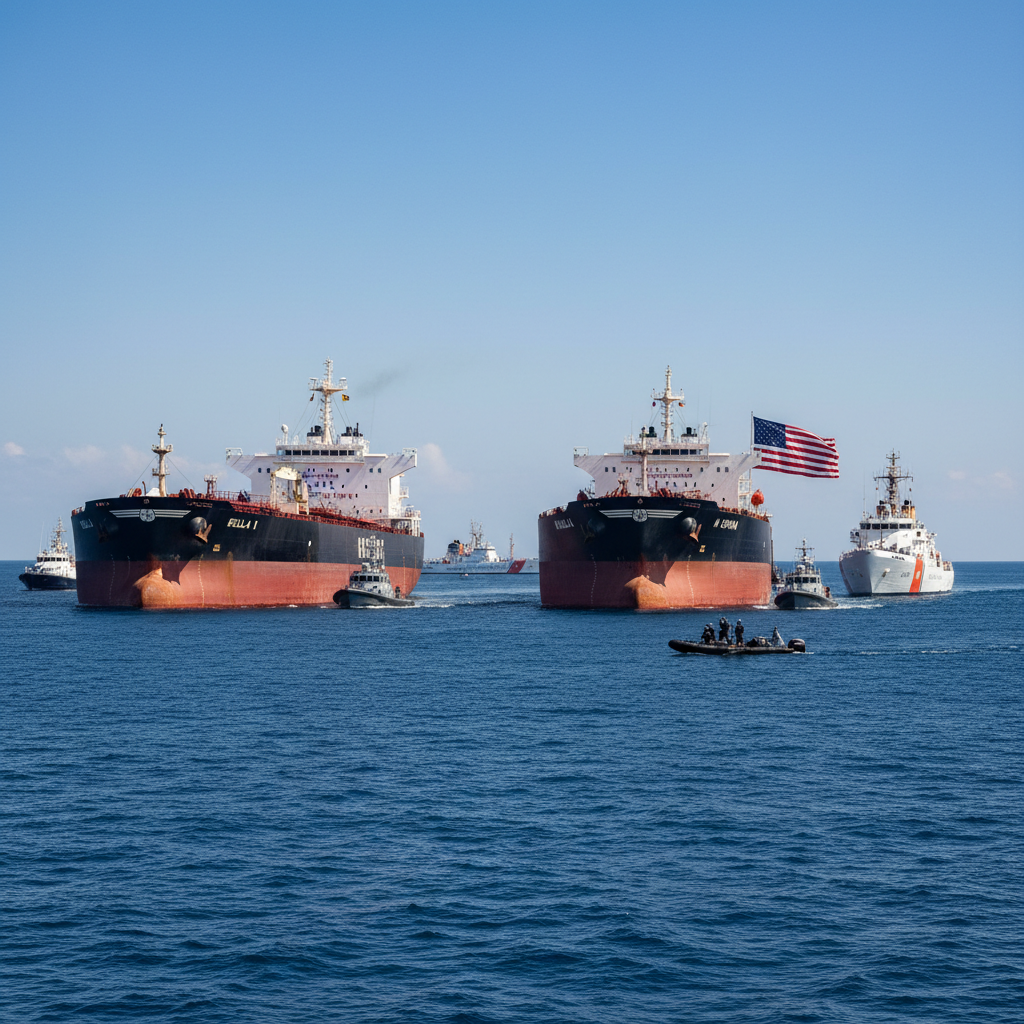
The tankers, Bella 1 (renamed Marinera) and M Sophia, were intercepted for violating U.S. sanctions. These vessels are believed to be part of a "shadow fleet" used for sanction evasion by Venezuela, Russia, and Iran. The U.S. government plans to sell 30–50 million barrels of Venezuelan oil worldwide, depositing the proceeds in U.S.-controlled accounts. Additionally, they intend to invest in Venezuelan oil infrastructure and the electrical grid to restore production and improve the quality of life for Venezuelans.
Secretary of State Marco Rubio revealed that the seized oil may be included in a U.S.-Venezuela deal involving up to 50 million barrels. This move aligns with President Trump's social media post, which claimed that the U.S. would receive up to 50 million barrels of Venezuelan oil, valued at approximately $2.5 billion, with profits to be shared with Venezuela. Energy Secretary Chris Wright emphasized that the U.S. government plans to exert indefinite control over Venezuelan oil sales and revenues through U.S.-controlled accounts, describing this policy as beneficial for both U.S. refiners and global markets, and ultimately for the Venezuelan people.
Russia strongly condemned the seizures and demanded the humane treatment of Russian nationals onboard. The Justice Department plans to prosecute crew members who resisted Coast Guard orders. The administration, facing criticism and doubts, maintains that strategic interests and national security warrant these interventions.
This development marks a significant shift in U.S.-Venezuela energy relations, with plans to rebuild the nation's oil industry involving American companies. The move also reflects the Trump administration's broader strategy to exert influence over Venezuela and its foreign alliances, including pressuring Venezuela's interim government to expel intelligence agents from countries like China, Russia, Cuba, and Iran.
The international community is closely monitoring these developments, as they have the potential to reshape global oil markets and influence diplomatic relations in the region. The situation remains fluid, and further actions by the U.S. government are anticipated in the coming days.
SEO Keywords: Venezuela, United States, oil tankers, sanctions, global oil markets, U.S. government, Secretary of State Marco Rubio, Energy Secretary Chris Wright, Russia, international relations, U.S.-Venezuela relations, oil exports, U.S. policy, geopolitical move, Bella 1, M Sophia, shadow fleet, U.S. intervention, oil infrastructure, electrical grid, U.S. control, oil sales, diplomatic relations, international community, global markets, U.S. influence, intelligence agents, China, Russia, Cuba, Iran, U.S. sanctions
Category: World
Image Prompt: A high-resolution image of the Bella 1 and M Sophia oil tankers being escorted by U.S. Coast Guard vessels, with the U.S. flag prominently displayed. The scene should capture the tension of the interception, with the Venezuelan flag visible on the tankers and the U.S. Coast Guard personnel in action. The backdrop should feature a clear blue sky and calm sea, emphasizing the strategic nature of the operation.
Reactions
Share:
Venezuelan oil tankers seizureUS sanctions on Venezuela oilglobal oil market impact 2023Venezuelan petroleum export newslatest US sanctions on Venezuelaoil export control changesVenezuelan economy newscurrent geopolitical events 2023US foreign policy on Venezuelaimpact of sanctions on oil industrybreaking news on Venezuelan oilTrump administration oil policiesVenezuelan oil crisis 2023oil revenue management in Venezuelasanctions relief for VenezuelaVenezuelan oil transport issuesinternational oil trade dynamicsoil market trendsUS economic measures against Venezuelaglobal energy crisis updatesVenezuelan oil exports challengesVenezuelan crude oil market insightsUS-Venezuela relationscurrent events in oil marketslatest trends in oil supplybreaking oil news 2023US policies on Venezuelan economyVenezuela trade sanctions newsimpact of US oil sanctions 2023Venezuelan oil industry updatesoil tanker news 2023